Your body knows first. Your blood holds the story.
We train AI models to read the response your body mounts to cancer and complex disease, written in a single tube of blood. Detection moves earlier.
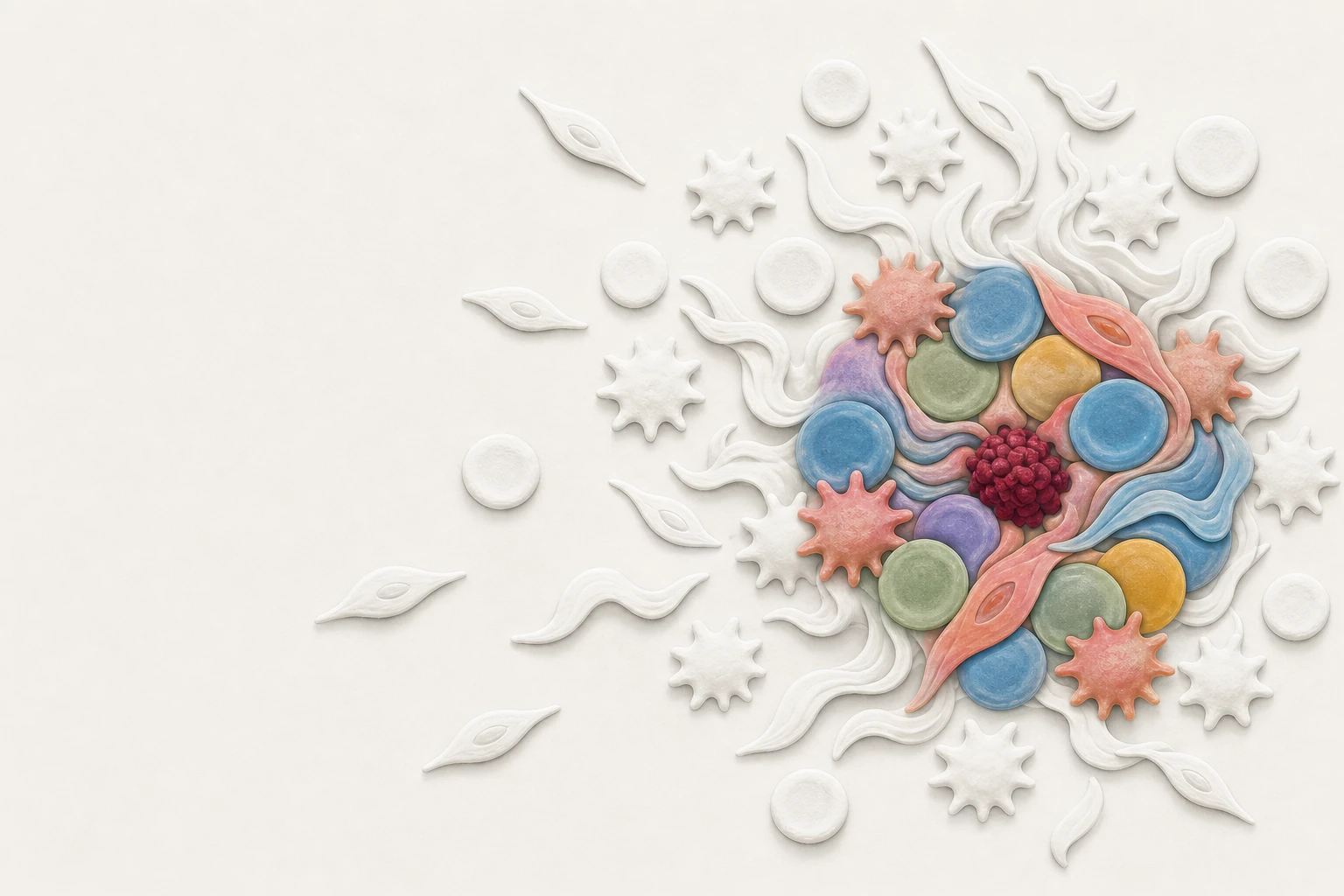
The body is not the background. It is the measurement.
A tumor begins in one place, but its biology does not stay there. It reshapes nearby tissue, changes cells across the body, and leaves a coordinated RNA signal in blood.
-
01 ⁄ 06
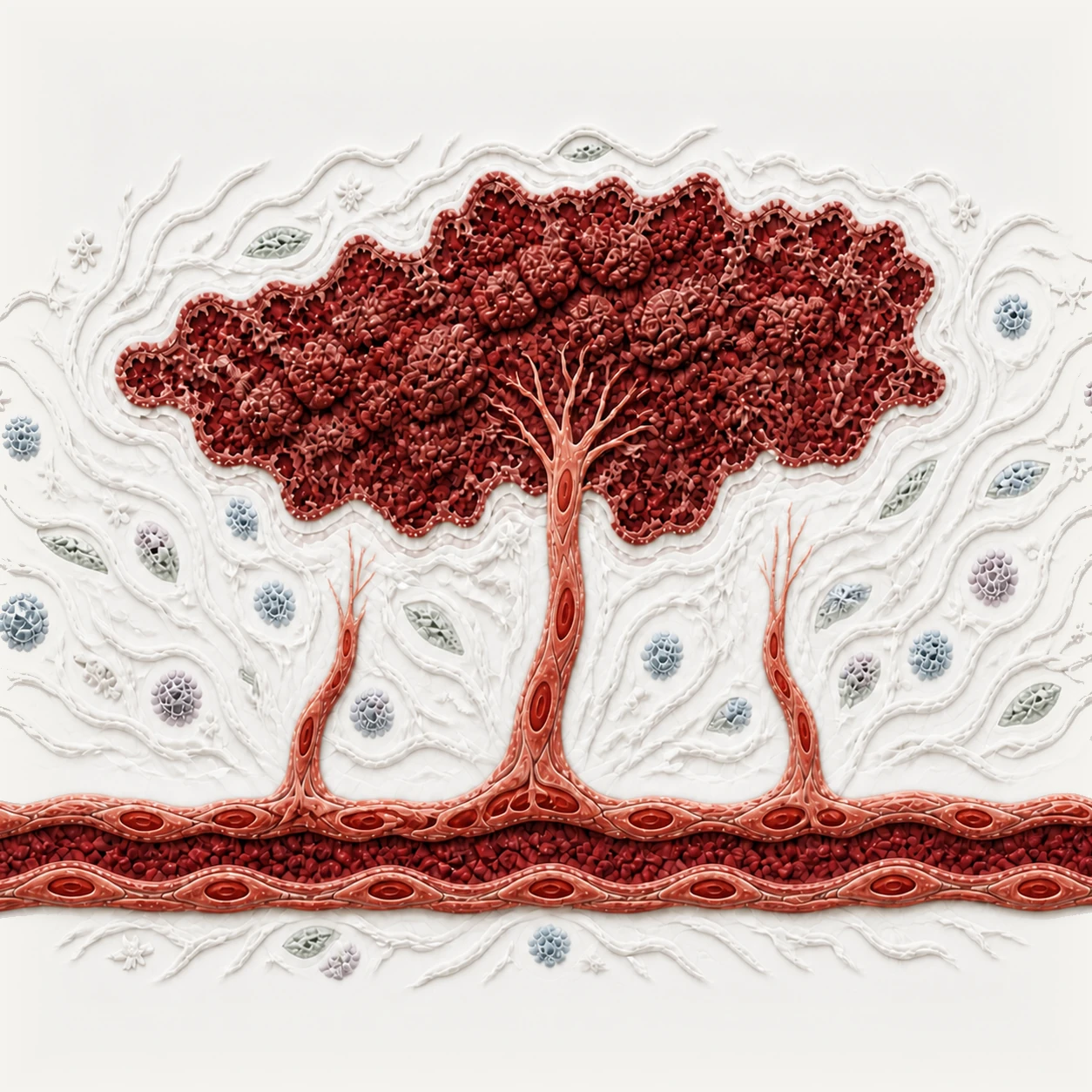
New vessels form
A growing tumor demands blood. It signals new vessels into being, wiring its own biology straight into the circulation.
-
02 ⁄ 06
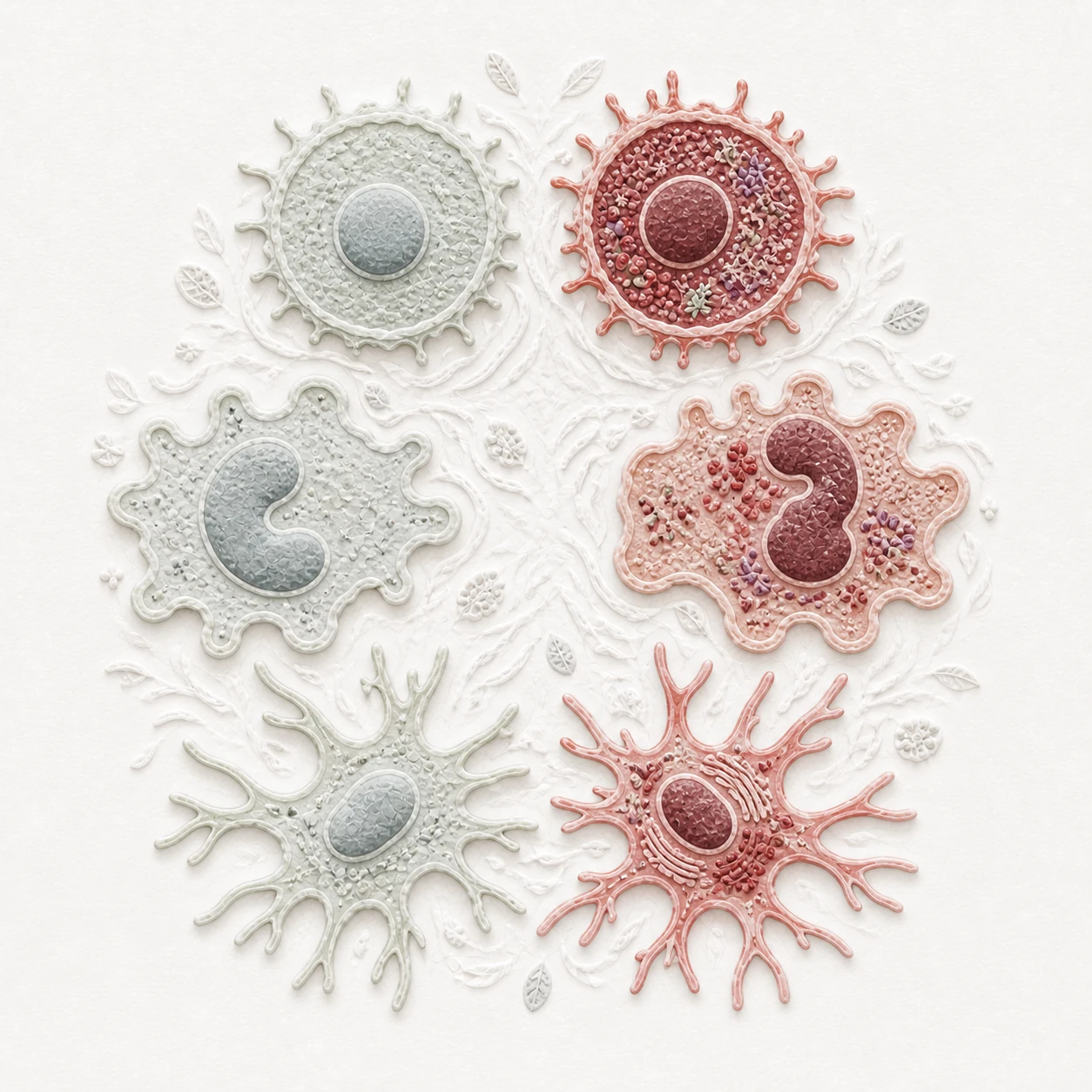
Immunity changes state
The immune system reads the tumor and shifts — T cells, myeloid and dendritic cells change program. Circulating immune RNA carries it.
-
03 ⁄ 06
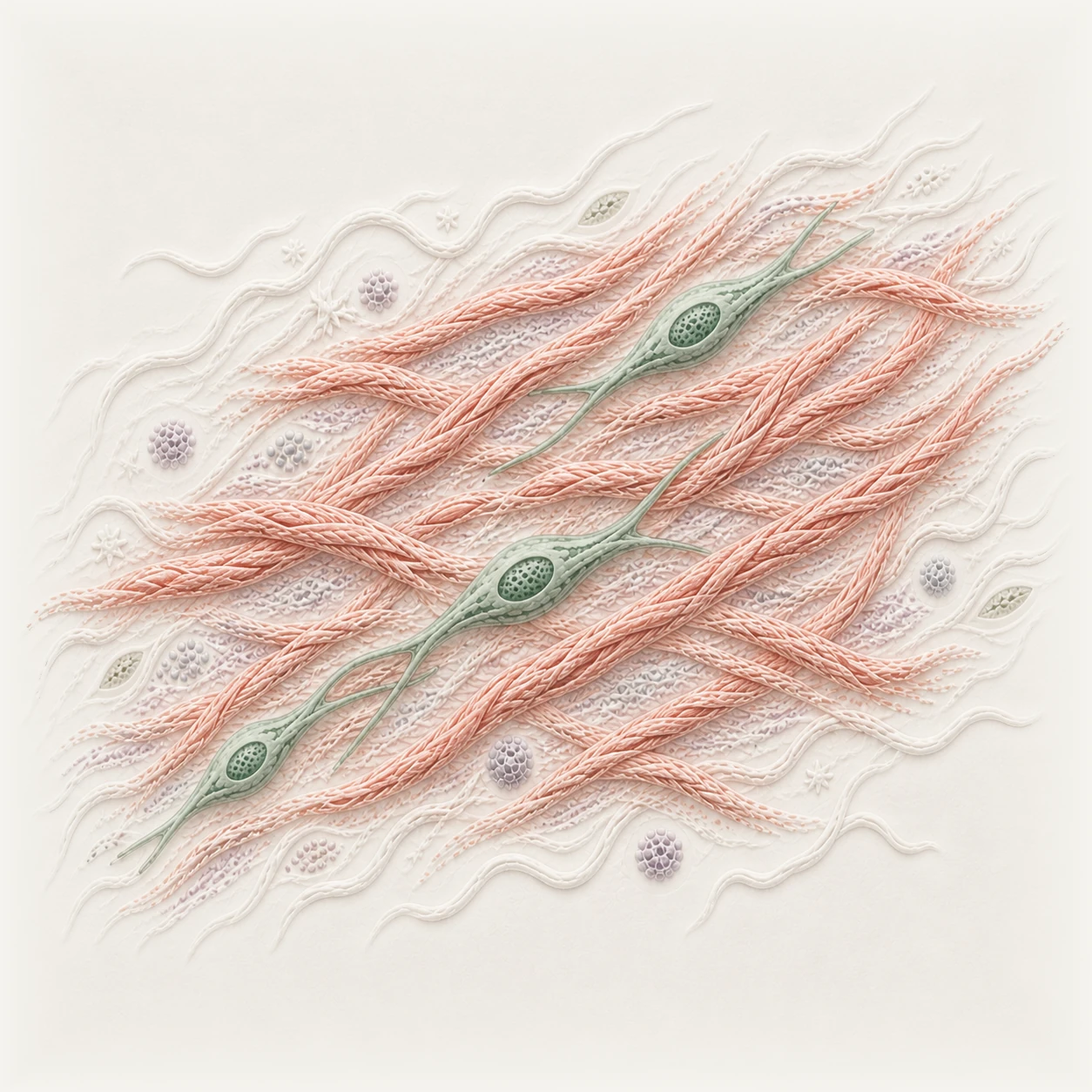
The matrix remodels
Cells around the tumor rebuild collagen and connective tissue. The enzymes that cut and stiffen the matrix release their signal into blood.
-
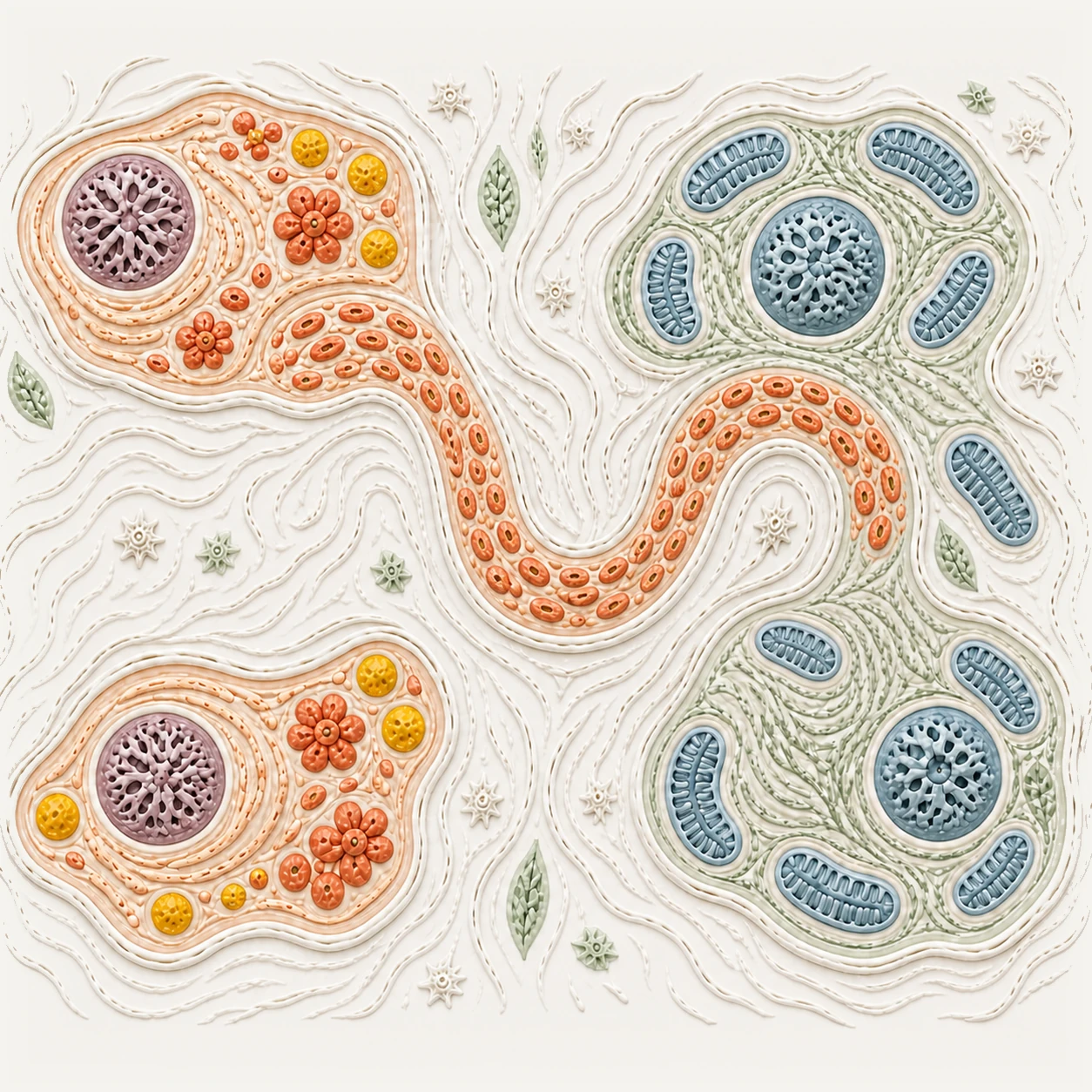
04 ⁄ 06
Metabolism reshapes
Low oxygen and fast growth rewire how tissues handle glucose, lipids, and cholesterol — pressure felt far beyond the tumor itself.
-
05 ⁄ 06
Messages enter circulation
Cells around the tumor release growth factors, cytokines, lipids, and vesicles into blood — carrying the surrounding tissue’s response through circulation.
-
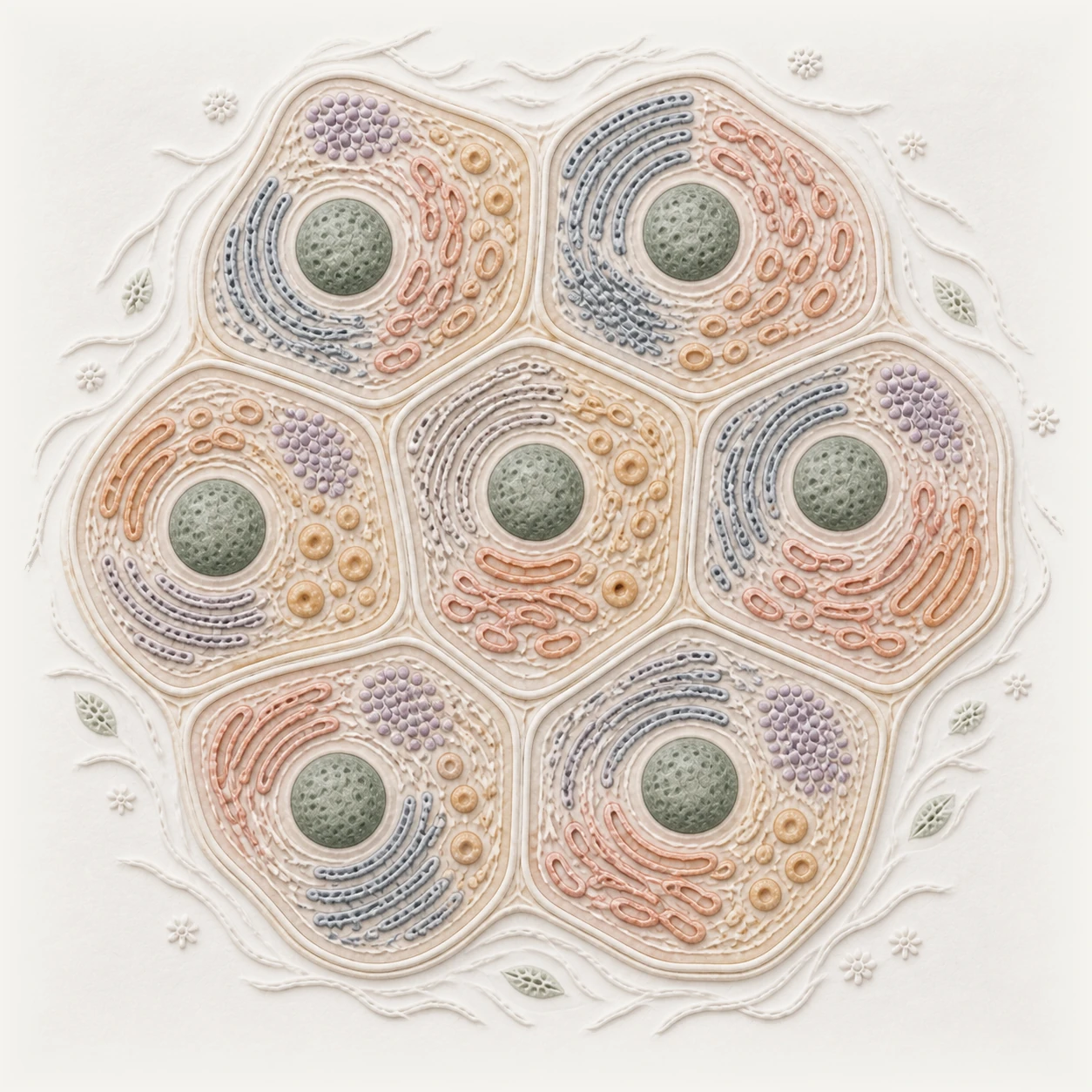
06 ⁄ 06
The liver responds
The liver retunes the proteins, lipoproteins, and clotting factors it releases into plasma — a distant organ answering a local tumor.


The tumor is local. Its effects are not.
Circulating cells carry RNA — a running record of their state and the signals reaching them. Early Marker reads the coordinated pattern across these programs at once, not any single marker. That pattern is what moves when cancer is present.
How it works
One blood draw. Thousands of messages. One pattern.
One platform turns a single draw into a cancer readout: formulate fresh blood into an RNA sample that concentrates the disease-relevant signal, read across the transcriptome, and train a model to find the coordinated pattern.
- Fresh blood, in full
- Formulate the sample
- Read total RNA
- Learn the signature
- Detect the signal
Fresh blood, in full

One fresh tube of whole blood is the starting material, before its components and signals begin to shift.
Formulate the sample

Our method selects which blood-derived material to read and prepares its RNA so the disease-relevant transcripts are concentrated rather than buried.
Read total RNA

Total RNA is prepared and quantified across the whole transcriptome, turning the sample into a molecular readout.
Learn the signature

A neural network trains on these readouts to learn the coordinated RNA signature of each cancer.
Detect the signal

The trained model finds that signature in a new blood sample and produces the cancer readout.
Why it matters
Found early, cancer is a different disease.
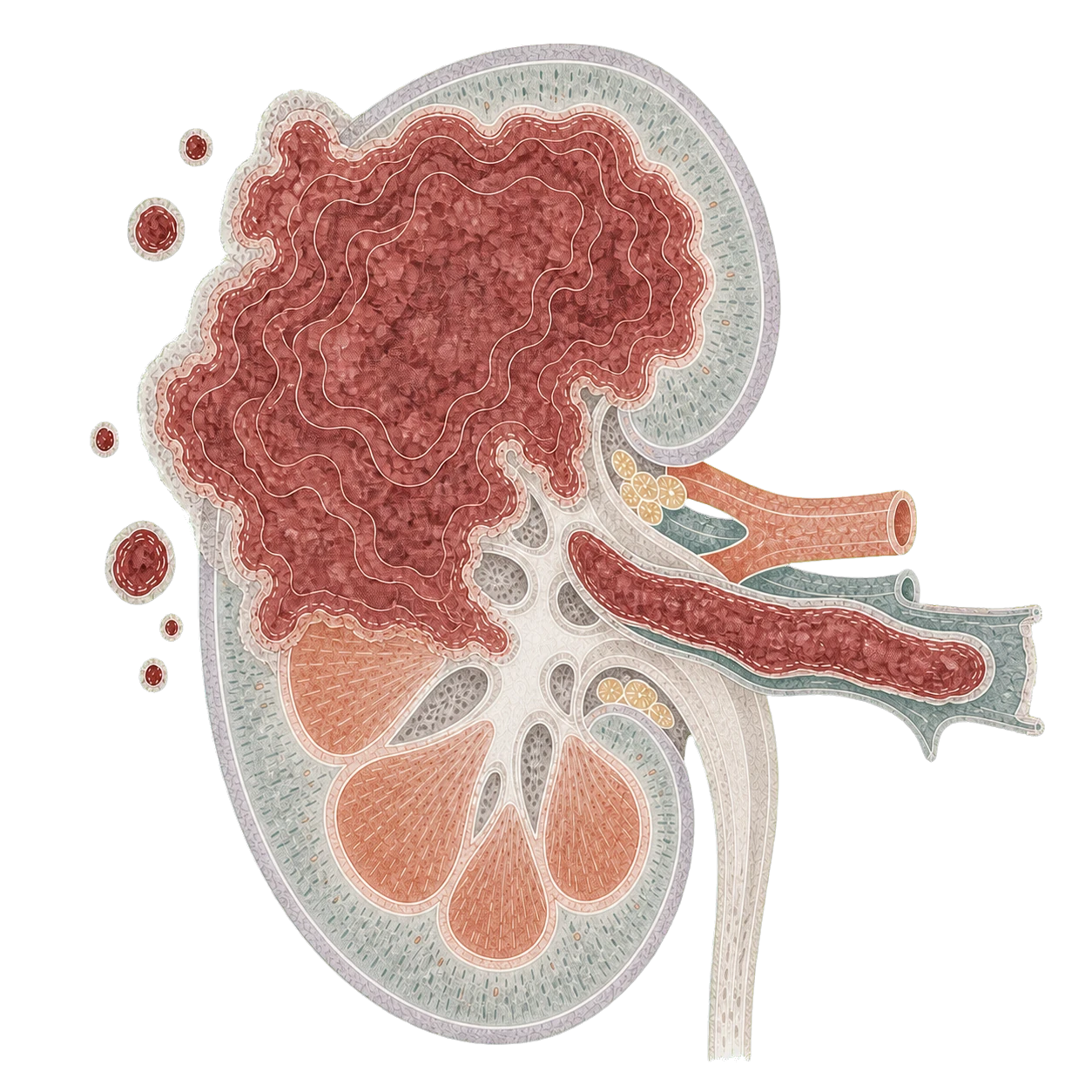
The earlier a kidney tumor is found, the more often treatment is one kidney-sparing operation rather than years of systemic therapy.
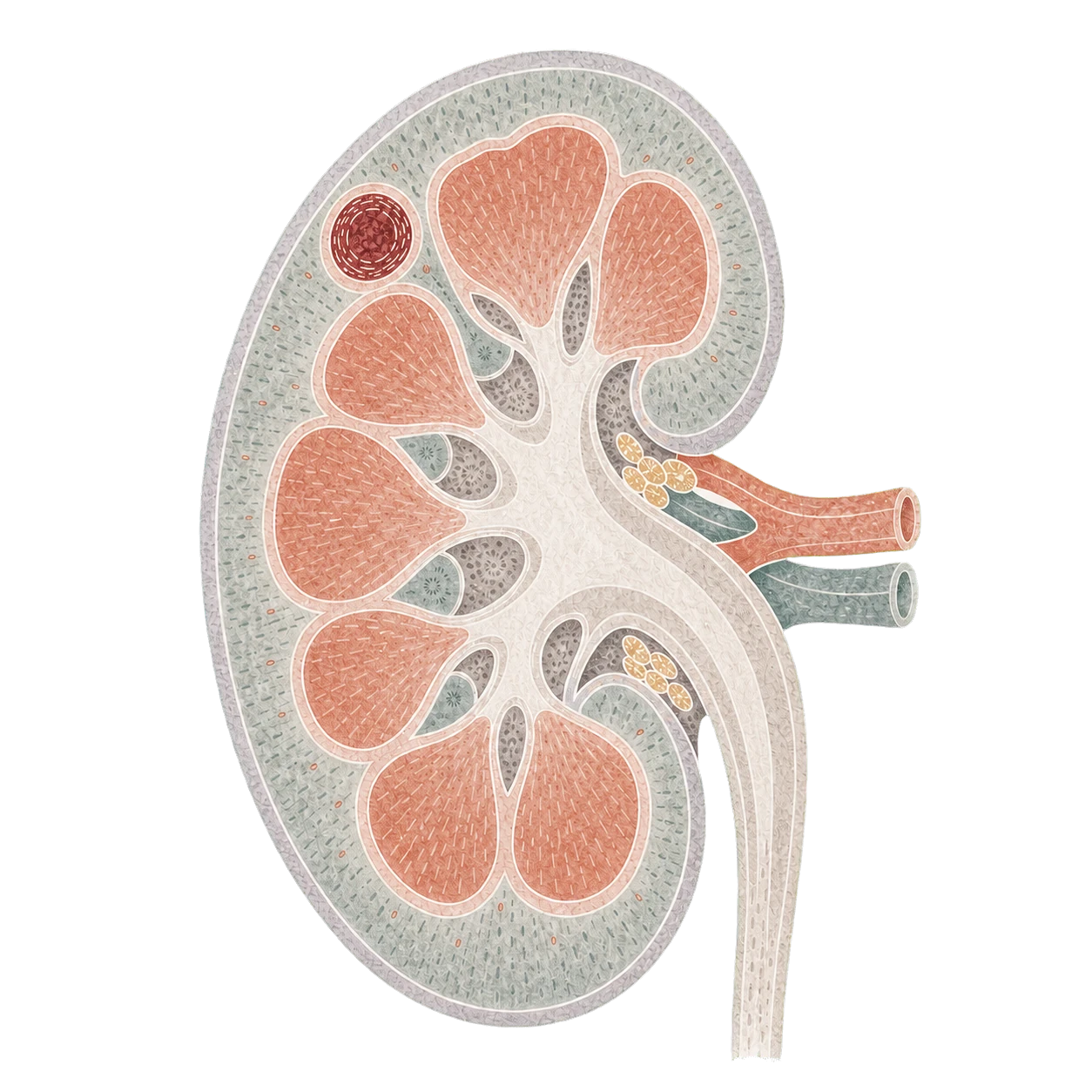 Early-stage tumor
93.6%
five-year survival · localized
Small and kidney-confined, up to 4 cm. Most are removed by kidney-sparing surgery, and the smallest can simply be watched.
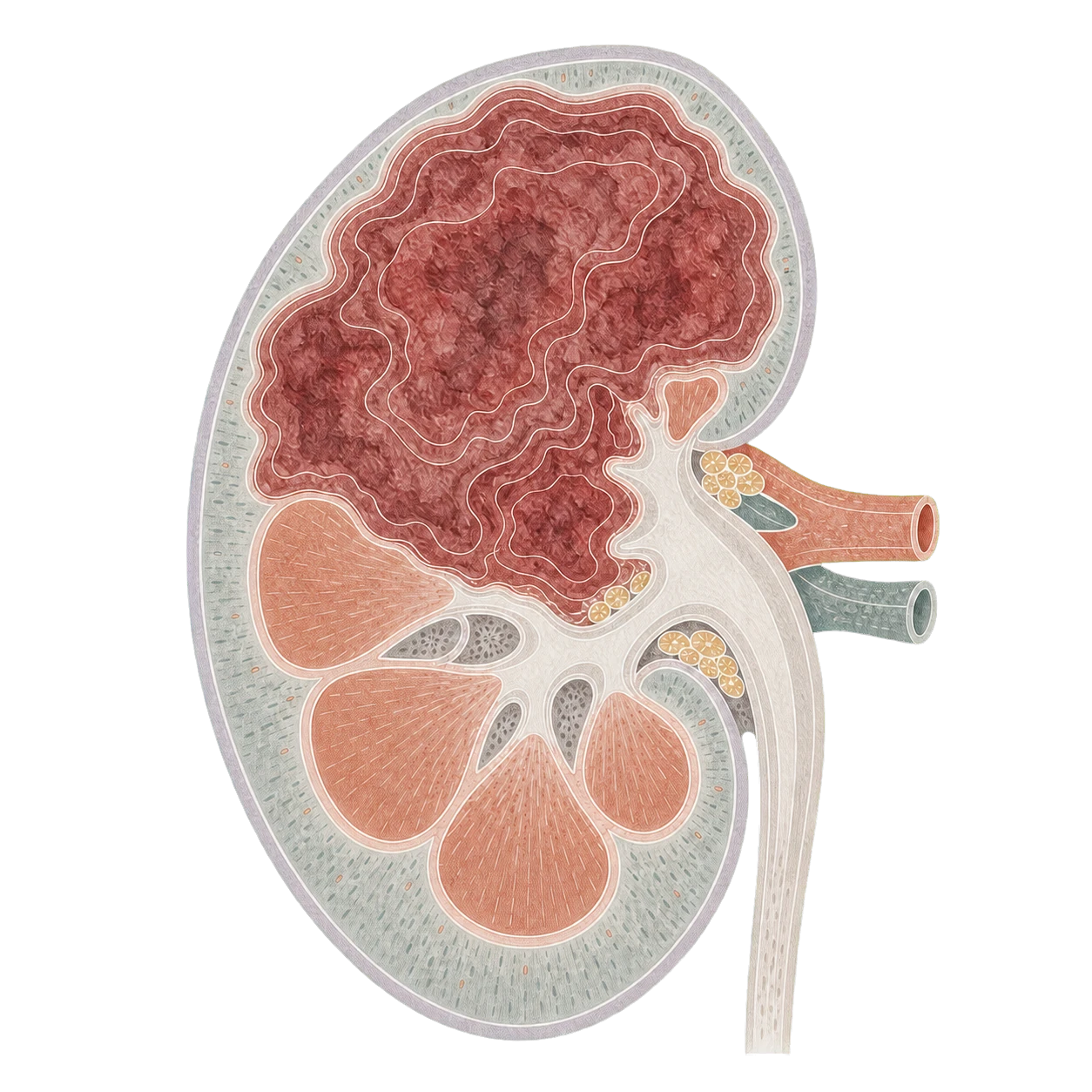
77.6%
five-year survival · regional
Larger, or reaching the renal fat or a vein. Usually the whole kidney comes out, and high-risk disease can add a year of immunotherapy.
20.3%
five-year survival · distant
In the vena cava, nodes, or distant organs. Surgery turns complex or selective, and treatment becomes drug combinations across multiple lines.
Pipeline
One platform. Many diseases.
Swipe across the landscape →
Start with the hardest outcomes. Scale to the broadest burden.
- Lead Kidney · Lung
- Expanding Pancreas · Breast · Prostate
- Roadmap Every cancer type
Major solid tumors with comparable staging shown. Sources: NCI SEER, 5-year relative survival, 2016–2022; 2026 U.S. case estimates.
The company
Born from research at UT Southwestern.
Early Marker builds one platform that reads the body’s response to disease in blood.
We bring molecular biology, patient data, and machine learning under one roof, aimed at a single idea: the body’s response to disease is written in blood, and reading it can move detection earlier — in cancer first, and beyond.